Almost everyone on Lawrence Park's west side has done part of this walk. You step through the stone gate at Alexander Muir Memorial Gardens on an August evening, loop the formal beds, maybe descend a few steps toward the lawn bowling club, and turn back before the trail commits to anything. That's the walk most of the neighborhood knows.
The full sequence, from the Yonge gate to Bayview Avenue and back, is roughly ninety minutes on foot and covers something genuinely uncommon in central Toronto: a 1930s designed garden that was physically relocated to escape the Yonge subway, spilling directly into a forty-acre stand of trees that predate the neighborhood itself. Two subway stops separate it from midtown. Most residents haven't walked past the tennis courts.
A garden that was moved to save it
The Muir gate you walk through was not always on that side of Yonge. Alexander Muir Memorial Gardens was created in 1933 by public subscription to honour the composer of "The Maple Leaf Forever," and landscape architect Edwin Kay designed the original park using the maple leaf as a motif for Toronto's centennial in 1934. The site sat directly across Yonge from Mount Pleasant Cemetery, where Muir is buried.
When construction of the Yonge subway impinged on that ground in 1951, the Toronto Transportation Commission funded a full relocation. The stone walls and plantings were moved north to Lawrence Park to replicate Kay's original layout, and the gardens were re-dedicated at their present location on May 28, 1952. What looks like a static piece of neighborhood infrastructure is actually the second version of the park, reassembled a few kilometres north of where it started.
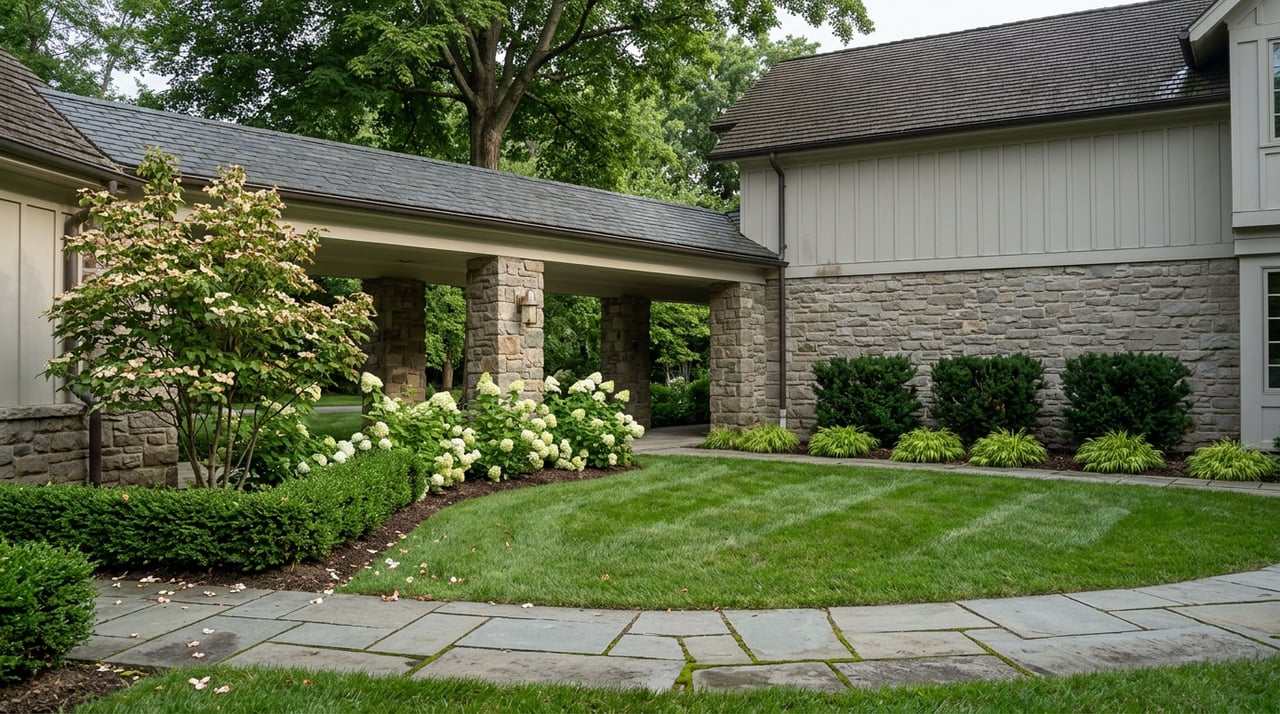
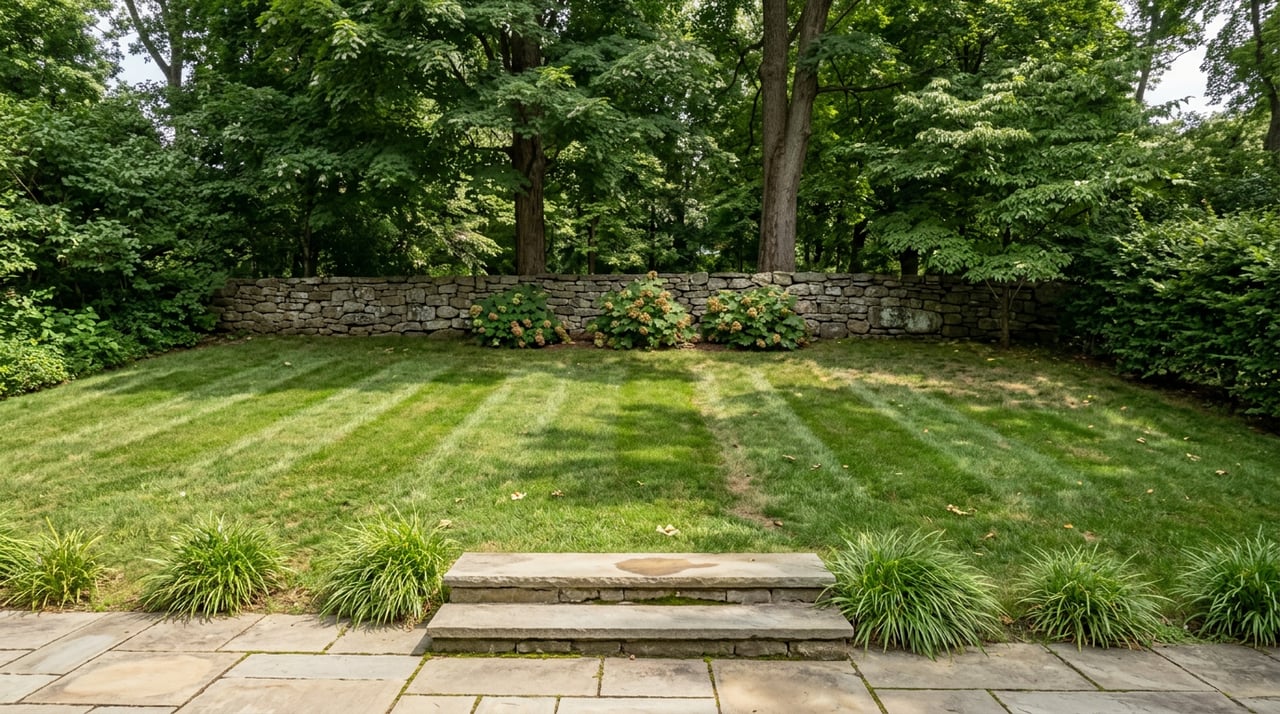
Kay's structure survived the move intact: a brick path behind the perimeter hedge, two axial terraced lawns, eight formal garden beds flanking the second lawn, and a monumental stone terrace closing the southern edge before the grade drops toward the ravine. A plaque at the southwest corner marks astronomer Helen Sawyer Hogg. This is the specificity residents walk past without noticing.
Three parks, one continuous corridor
The single most useful thing to understand about the walk is that it is not one park. It is four contiguous parks stitched together by Burke Brook, and each has a different personality that changes what the walk feels like at different hours.
Alexander Muir Memorial Gardens
The formal front. Roses, lavender, benches, the stone gate off Yonge, and a small population of wedding photographers on Saturdays in August. This is the section that reads as a landscape, not a trail. Muir Gardens has no public washroom and no drinking fountain, which matters more than it sounds if you're bringing kids or a dog. The nearest facilities are twenty-plus minutes east at the far end of Sherwood Park.
Blythwood Ravine Park
Where the walk changes character. Alexander Muir Road descends south into the ravine to serve the Lawrence Park Lawn Bowling & Croquet Club, and the trail proper picks up along Burke Brook. The AllTrails route from Muir to Bayview is 2.8 miles out-and-back with about 209 feet of elevation gain, typically ninety minutes at a walking pace. It follows the brook on a wide path with staircases in a few sections, which is the polite way of saying strollers and wheelchairs can get through the first stretch but not the full length.
Sherwood Park
The reason to keep going. Sherwood covers roughly forty acres and holds one of the finest stands of native trees in the central city, some over 150 years old. The mix is denser than anywhere else on the corridor: red and white oak, white pine, red and sugar maple, black cherry, up to 130 vegetative species. Springs surface along the boardwalk. A large forested section runs off-leash, which is worth knowing before you arrive with a nervous dog or a small child. The east end near Blythwood Road has the amenities the western half doesn't: a playground, picnic pavilion, splashpad, BBQ area, and public washrooms.
Who the trail belongs to, by hour
Locals who use the ravine regularly have figured out an unspoken schedule, and visitors who miss it end up frustrated. Weekdays between roughly ten and three, the off-leash section in Sherwood is dog-walker territory. Not aggressive, but dense, and dogs are off-leash almost everywhere the signage permits and a few places it doesn't.
Before nine in the morning the corridor belongs to runners, and the boardwalk narrows enough that passing takes coordination. Evenings after seven soften considerably. If your household includes anyone anxious around loose dogs, the window between five and seven on a weekday is the honest recommendation. Weekends before ten are the quietest hours the trail sees in August.
Free curb parking exists on Weybourne Crescent and Dawlish Avenue after 6 p.m., and on Blythwood Road east of Mount Pleasant if you want to enter from the middle of the corridor rather than commit to the full out-and-back from Yonge.
Where the walk fits into a Saturday
The reason the ravine chain rewards a full walk rather than a loop back to Yonge is the return leg. Coming back up out of Sherwood Park and re-emerging at the Muir gate puts you at 2901 Yonge Street with the Yonge Lawrence Village strip stretching north. The BIA covers roughly 250 businesses between Lawrence Avenue and Yonge Boulevard, and the timing of a ninety-minute walk lines up naturally with either an early dinner or a late brunch, depending on when you started.
A few landings worth pairing with the walk, chosen for how well they handle the specific state of being sweaty, hungry, and not wanting to sit through a two-hour tasting menu:
- Pii Nong Thai at 3321 Yonge, a Summerlicious participant this July with the three-course prix fixe format that runs through July 19. Fast enough after a hot walk, and the room handles walk-ins reasonably.
- Trio Ristorante & Pizzeria at 3239 Yonge, family-run with a wood-burning oven visible from the dining room. A category the strip has more of than any other, and the one most consistently recommended by residents.
- Hazels Diner at 3401 Yonge for anyone whose walk ended at breakfast time rather than dinner.
- Kristapsons at 3248 Yonge if the walk was the pretext for picking up smoked salmon on the way home.
- Francobollo at 1959 Avenue Road for a Saturday that started earlier and has more evening in it than the standard version. Slightly off the Yonge strip proper, but close enough to walk.
The Avenue and Lawrence stretch has been in transition through 2026. The high-profile LSL project rebranded to Onze in early 2026 after chef Didier Leroy left the partnership in late 2025, which changes the shape of the higher-end dining option a few blocks west of the ravine entrance. Residents who used to route special occasions there have quietly shifted back toward the Yonge strip.
Small logistics residents still get wrong
The Muir gate is the most photographed entry, but it is not the fastest. Lawrence station on Line 1 puts you at Yonge and Lawrence, and the walk south to the gate takes roughly four minutes. Residents who drive tend to park on the residential streets east of Yonge and lose ten minutes to the loop back, which defeats the point.
The Bayview end of the trail has no legal parking. There is a trail entrance on the west side of Bayview just north of the CNIB overpass, marked by a city garbage receptacle at the top of the ravine. Useful to know as an exit point, less useful as an entrance.
Washrooms only exist at the east end of Sherwood Park near the playground and picnic pavilion. If you are walking with children, plan the route east-to-west rather than west-to-east so the amenities land at the start.
Burke Brook is formally the North Toronto Storm Trunk Sewer in this reach, which is worth mentioning only because dogs will drink from it and the answer is that you should discourage that. The channelized sections carry storm runoff from a very large upstream area.
Some of the boardwalk and stair sections in Sherwood have been showing their age. Doable in running shoes, less comfortable in anything with a heel or a smooth sole after rain. The staircases are the reason the corridor is not fully accessible end-to-end.
Why the full walk matters more than the loop
The point of doing the whole sequence at least once, rather than the front-garden loop most residents settle for, is that Alexander Muir Memorial Gardens only makes sense when you see what it is a doorway to. Edwin Kay's formal beds were designed as the polished western terminus of the Northern Ravines and Gardens Discovery Walk, and the whole point of the composition is the contrast between the geometry of the beds and the old-growth forest that starts less than four hundred metres away. Turning back at the tennis courts is turning back at the punchline.
August is the last month of the year the corridor looks the way it was designed to. The formal beds are still in full flower, the canopy in Sherwood is still closed, and the boardwalk is dry. By late September the walk is a different one, still worth doing, but no longer the summer version.
If you are thinking about a move within Lawrence Park, or about what a home two blocks off this corridor is actually worth on a resale basis, the team at Frank Fu Feng can walk you through the numbers with the same specificity we've applied to the trail. Get in touch for a private consultation or a home valuation tailored to your street, not the neighborhood average.