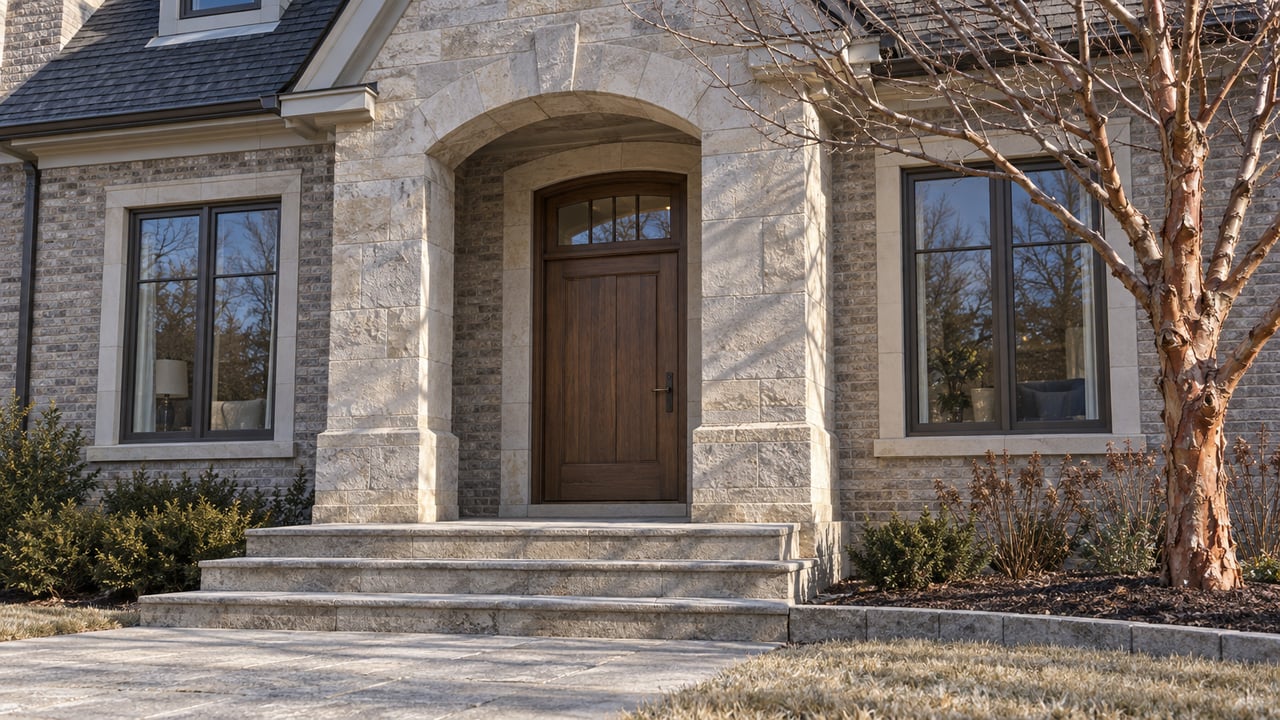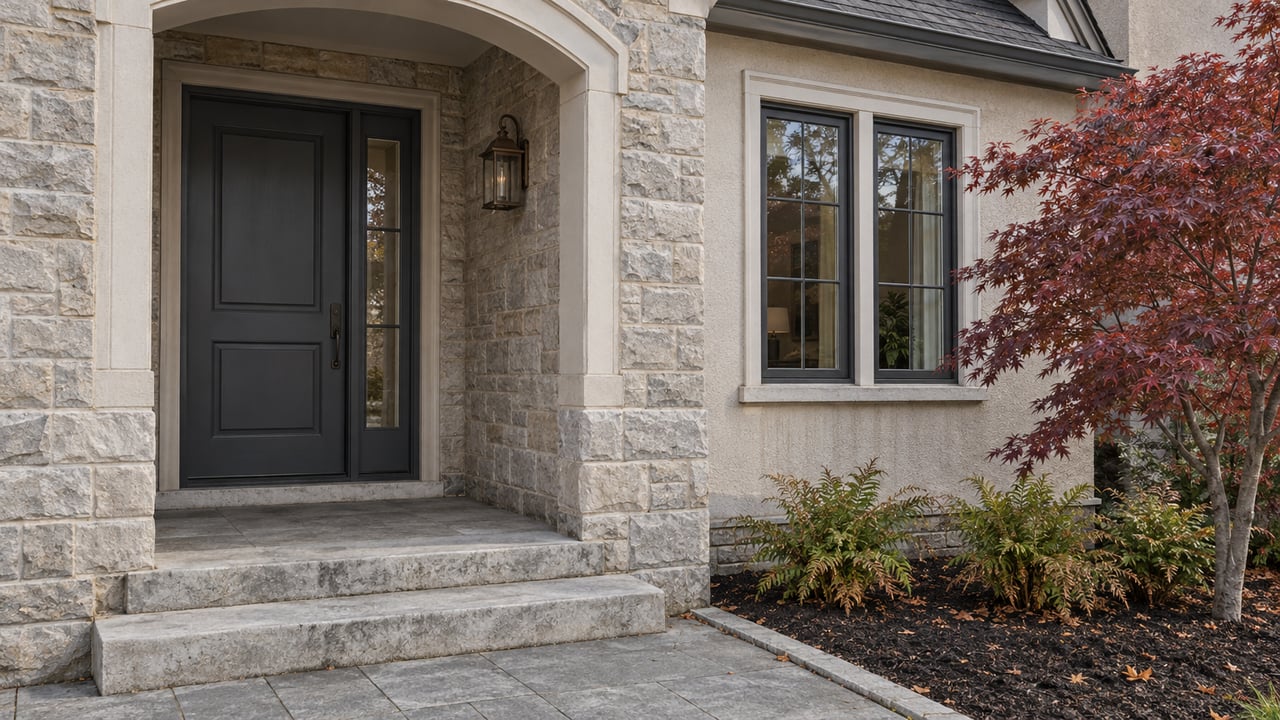
A buyer we'll call typical is comparing two homes with almost identical asking prices. One sits in North Toronto, inside neighbourhoods like York Mills or Lawrence Park. The other sits in Unionville, a twenty-minute GO ride up the Stouffville line. The listings look like a wash. The lot sizes are close. The finishes are close. Then the lawyer sends the closing cost estimate, and the two numbers stop looking anything alike.
That gap has nothing to do with the house. It has to do with a line on a map that most buyers never think to ask about until it's already showing up in their trust ledger.
The Line Nobody Draws on a Listing Photo
Ontario charges every buyer in the province a provincial land transfer tax on a sliding scale. WOWA notes that Toronto is the only municipality in Ontario that adds a second, matching tax on top of it. The City of Toronto says the Municipal Land Transfer Tax has applied to every purchase inside the City of Toronto since February 2008. The Toronto Taxpayer guide says a home north of Steeles Avenue in Markham or Vaughan, or in Mississauga, does not pay Toronto's municipal tax; the buyer pays only the provincial tax.
That means a buyer comparing a North Toronto listing to a Unionville listing at the same price is not comparing two versions of the same closing cost. They're comparing a jurisdiction that taxes the transaction twice against one that taxes it once.
What the Math Actually Looks Like
The gap scales with price, which is exactly why it matters more the further up the ladder a buyer shops. On an $800,000 purchase, roughly the range of a starter condo or a smaller entry home, HomeCalc's Toronto tax example puts the combined amount at about $24,950, while the provincial-only tax outside the city runs about $12,475. Move up to $1,000,000, close to what Toronto's average detached home has traded for in 2026, and the Toronto total climbs to about $32,950 against $16,475 outside the city. The pattern holds because the municipal tax largely mirrors the provincial brackets, so below the $3 million mark, Toronto buyers are paying close to double what a Markham buyer pays on the identical price.
On a $5 million purchase closing in Toronto after April 1, 2026, combined land transfer tax runs approximately $270,000. The same price closing in Markham runs approximately $110,000. The gap is about $160,000, and it exists purely because of which side of the municipal line the property sits on.
There's a wrinkle worth flagging before anyone assumes the first-time buyer rebate closes the gap. A first-time buyer in Toronto can claim up to $8,475 in combined provincial and municipal rebates, which brings the net tax on that $1,000,000 home down to about $24,475. A first-time buyer doing the same purchase in Markham only qualifies for the $4,000 provincial rebate, bringing their net tax down to about $12,475. Toronto's rebate is more generous in absolute terms, but it's covering a much bigger bill. The buyer inside the city still pays roughly $12,000 more, even after both governments hand back their maximum credit.
| Purchase price | Toronto (provincial + municipal) | Markham / Unionville (provincial only) | Gap |
|---|---|---|---|
| $800,000 | ~$24,950 | ~$12,475 | ~$12,475 |
| $1,000,000 | ~$32,950 | ~$16,475 | ~$16,475 |
| $5,000,000 (post-April 2026) | ~$270,000 | ~$110,000 | ~$160,000 |
Why the Gap Stopped Being Linear on April 1
Until this spring, that gap grew in a fairly predictable straight line as price went up. That changed on April 1, 2026, when, as Ratehub's Ontario land transfer tax guide explains, Toronto introduced graduated luxury brackets on the Municipal Land Transfer Tax for the portion of a residential purchase price above $3 million. Those new brackets run from 4.4% up to 8.6% depending on how far above $3 million the price climbs, layered on top of the provincial rate of 2.5% that already applies to anything over $2 million. On the highest tranches, a Toronto buyer can now face a combined marginal rate over 11% on the portion of a purchase above $3 million, while a Markham buyer pays 2.5% provincial tax on that same tranche and nothing else.
The practical effect is that the tax gap no longer scales evenly with price. It scales in steps, and the step happens to land right at the price band where a lot of North Toronto luxury inventory sits, the detached homes in York Mills, Lawrence Park, and St. Andrew-Windfields that regularly transact above $3 million. Unionville's detached market, by contrast, is currently trading at a median around $1.66 million as of early September 2026, which puts the bulk of its inventory well under the threshold where Toronto's new brackets start to bite. A buyer comparing similarly sized homes across the boundary isn't just avoiding a second tax. In many cases they're avoiding the specific price tier where that second tax just got a lot more expensive.
What Unionville's Market Actually Looks Like Right Now
None of this works as an argument if Unionville were a compromise on lifestyle. It isn't. As of early September 2026, detached homes in Unionville carried a median price around $1.66 million, townhomes around $1.08 million, and condos in the $732,000 to $950,000 range, with homes selling at roughly 97% of asking price in about 28 days on average. That's a market with real movement, not a discount bin.
The neighbourhood also isn't standing still. This fall, builders are pushing new supply into the broader Markham corridor without any of it carrying a municipal transfer tax: a new phase of single-family homes and towns is landing at Union Village in late September, and additional low-rise towns are staged nearby along Warden Avenue. None of that new stock, regardless of price, will ever owe Toronto's municipal tax, because none of it sits inside Toronto's boundary.
What the Savings Actually Buy
The dollars saved at closing aren't abstract. They're the difference between a renovation budget and a down payment shortfall, and in Unionville they land in a neighbourhood built around an actual Main Street rather than a commercial strip. Heritage storefronts along Main Street Unionville house restaurants like Watercolour and NextDoor, backing onto Toogood Pond and its walking trail, with the Varley Art Gallery a short walk away. The old Unionville train station building, rebuilt in 1991 and renovated again in 2005, has been preserved as a community centre, and the working GO station beside it runs on the Stouffville line with service to Union Station, with Metrolinx's ongoing expansion plans aimed at bringing frequency down toward 10-minute headways in the years ahead.
For a family upsizing out of North Toronto, that combination matters more than a spreadsheet line. The tax savings on a $3 million-plus move can run into the tens of thousands of dollars, sometimes well into six figures depending on price, while the move also puts them in a community with its own walkable core.
The Question Worth Asking Before You Compare Two Listings
If you're comparing a home in Toronto to a home in Unionville and the asking prices are close, ask your lawyer to run the actual closing cost estimate on both before you assume the prices are telling you the whole story. The list price is one number. The line on the map is a second number, and as of this spring, it's a bigger one than it used to be.
A Few Questions We Hear Often
Does the tax boundary depend on where I live or where I work, or strictly on where the property sits? Strictly the property. The Municipal Land Transfer Tax applies based on the physical location of the home you're buying, inside the City of Toronto's boundary or outside it. Your own residency or workplace has no bearing on it.
If I currently own a home in Toronto and I'm selling it to buy in Unionville, do I pay the Toronto tax again on the sale? No. Land transfer tax is a buyer's tax on the property being purchased, not a seller's tax. You would only have paid it once, when you originally bought your Toronto home if that purchase happened inside city limits. Buying in Unionville triggers only the provincial tax on that new purchase.
Is the $3 million luxury threshold based on the purchase price or on my mortgage amount? Purchase price, specifically the value of consideration stated in the transfer.
If you're weighing a move between North Toronto and Unionville and want the real numbers run for your specific price range, Ample Realty Team can walk through both sides of the line with you. Get Your Free Home Valuation and we'll help you see the whole picture before you make an offer.
This article is general information, not legal, tax or financial advice. Consult a qualified professional about your situation.